
Golf Routine Practice: How to Build a Pre‑Shot Process That Lowers Your Scores
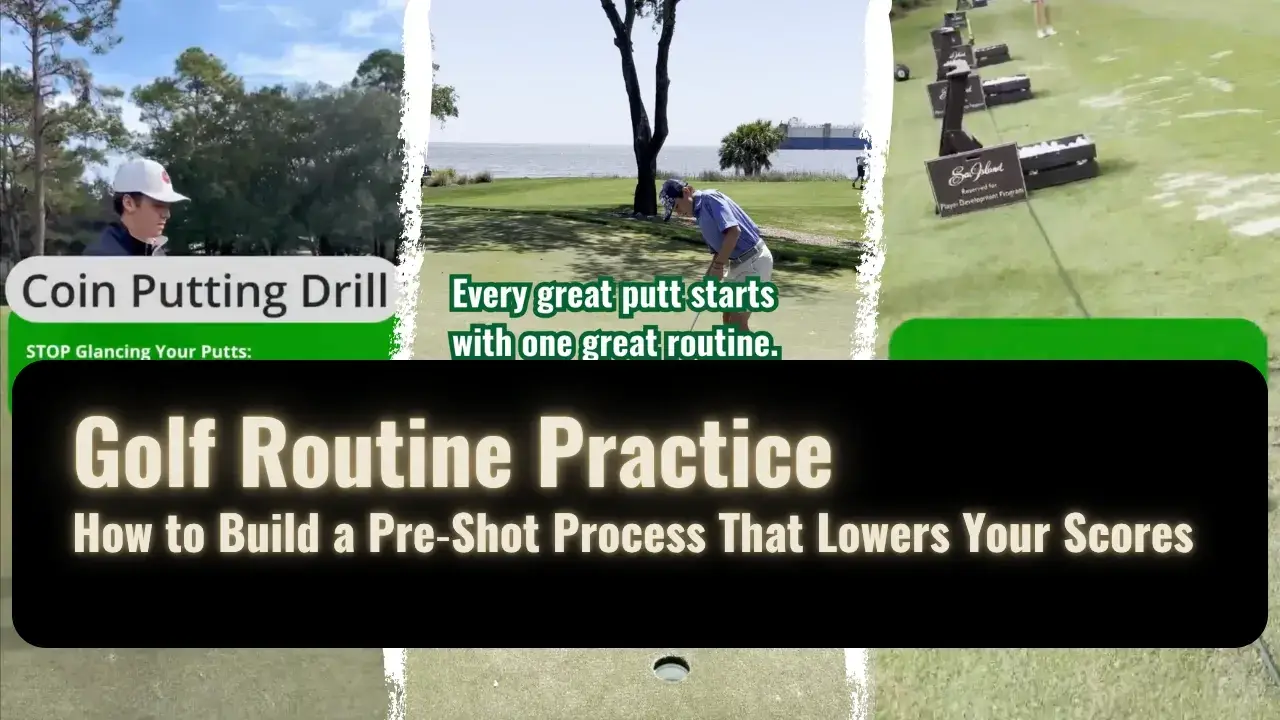
Golf Routine Practice: How To Train a Process That Actually Travels To the Course
Most golfers don’t need more tips. They need a golf practice routine that holds up when it counts. A good routine turns practice into something that reliably shows up on the course instead of disappearing under pressure.
In this post we’ll walk through a simple, no‑nonsense way to build a golf practice routine, from the putting green to full swing, that you can repeat every round, on every shot, without overthinking.
Why Your Golf Practice Routine Matters
A pre-shot routine is like your bunker game: you can ignore it until you’re in a bad spot and suddenly wish you’d trained it. A good golf practice routine does three things:
- Gives every practice session a clear purpose so you’re not just beating golf balls.
- Trains one consistent process you can repeat for putts, wedges, and full swing under pressure.
- Lowers your scores by reducing fear, doubt, and “hit it somewhere” swings in big moments.
If you’re an amateur golfer who grinds on mechanics but still can’t trust your swing in a tournament or practice round, you don’t have a skill problem; you have a routine problem.
Step 1: Treat Every Shot Like a Math Problem
Great players don’t walk into the ball guessing. They solve a simple “math problem” first, then let the routine hit the shot.
For full swing and wedges, that problem might include:
- Total yardage and how far the shot is playing with wind and elevation.
- Landing spot: where you want the ball to pitch, not just finish.
- Expected release or spin based on lie and trajectory.
For short game and chips, the math problem is usually:
- Lie first—always.
- Landing spot on the green or fringe.
- Trajectory and how much the ball will run out.
On the green, the math problem becomes:
- Distance (for example, 30 feet) and basic slope.
- Grain changes, tiers, and where the ball needs to start.
The point is simple: all decisions happen before you start your practice routine. Once you walk in, you’re done solving.
Step 2: Separate Refocusing From Routine
One of the biggest mistakes amateur golfers make is blending thinking and swinging. They read the putt while standing over the ball, or they change club mid-routine. That’s a fast track to tension.
Borrow this simple structure:
- Refocusing phase: away from the ball, you read the shot, pick the club, choose your target, and settle on the swing you want.
- Routine phase: once you take that first step toward the ball, no more decisions. You’re just running your process.
On a par three, for example, you might work out total yardage, how far it’s playing into or downwind, and the distance you want the ball to play to the landing spot. Only when you’re clear on that number do you start your long game routine.
Your goal in golf routine practice is to train this separation until it becomes automatic; think first, then execute.
Step 3: Build a Simple Putting Routine
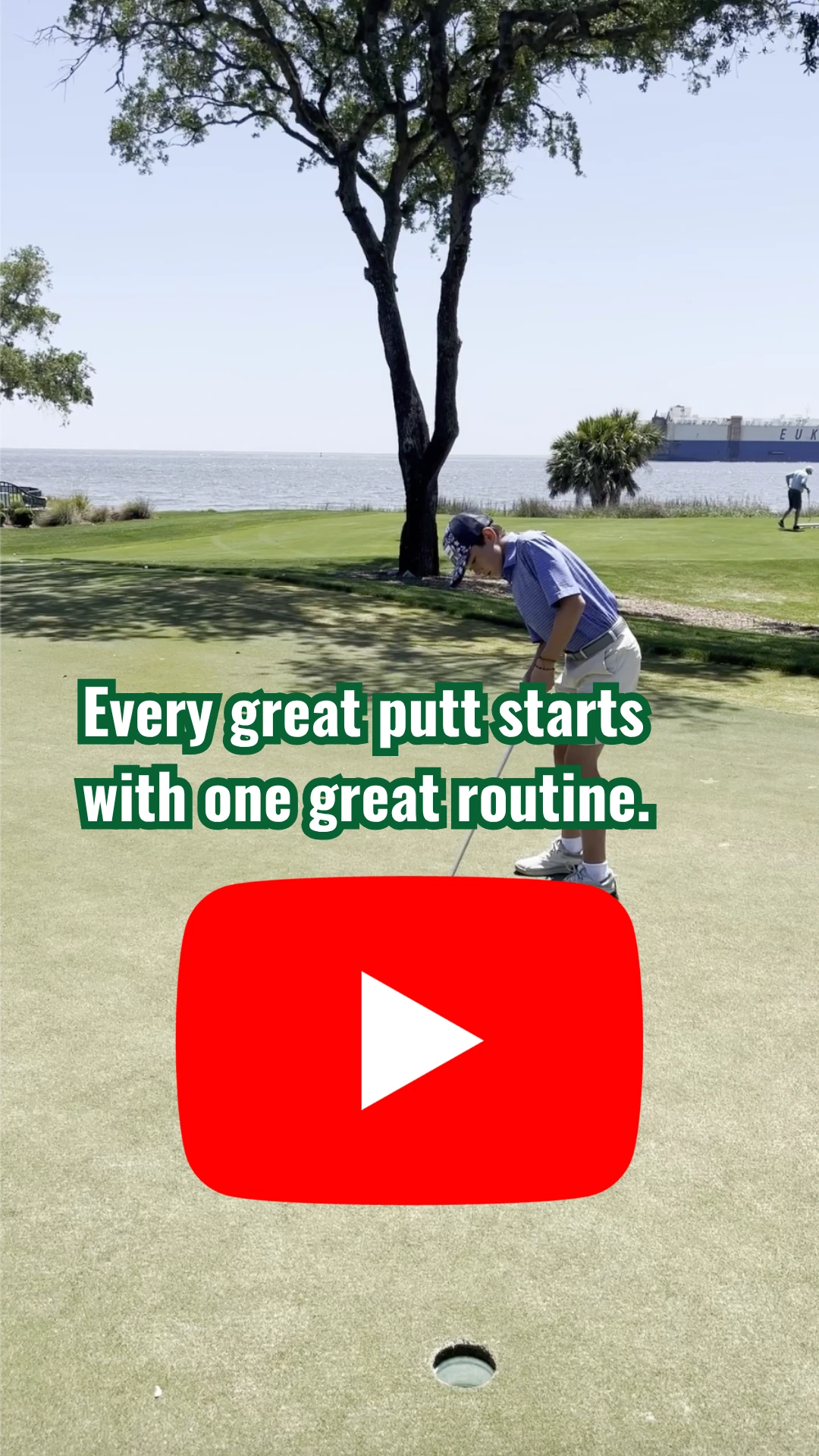
(Hudson Putting Routine Video)
The best golf practice routine starts on the practice green. Putting is where a repeatable process pays off fastest.
Use your Hudson putting routine clip here as the visual example. In that video, viewers will see a full routine from read to roll, including:
- Solving the putt first: distance, slope, and line.
- Using the line on the ball and committing to it before stepping in.
- Taking realistic rehearsal strokes from the same place they’ll putt, matching stroke length and speed.
- Stepping in, setting the face, then the feet, one last look, and then rolling the putt.
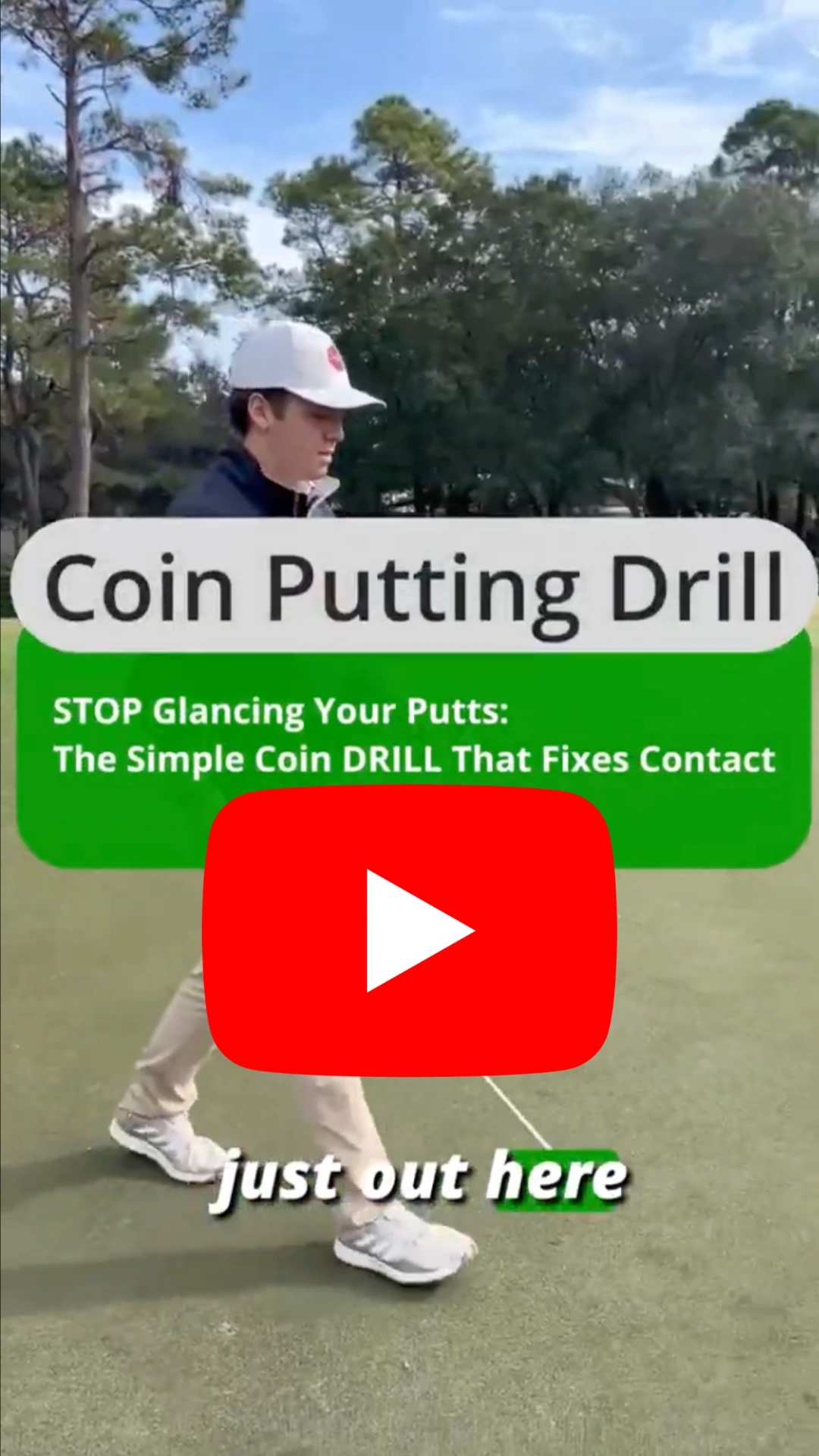
To reinforce the habit, add a basic drill: place a coin or marker about 30 feet away on the practice green and run your full routine to roll putts that consistently finish around that marker. You’re training distance control and routine at the same time, instead of rolling putt after putt aimlessly.
Watch this short clip to see the full putting routine in action:
Step 4: Practice a Repeatable Setup
(Set‑Up Video)
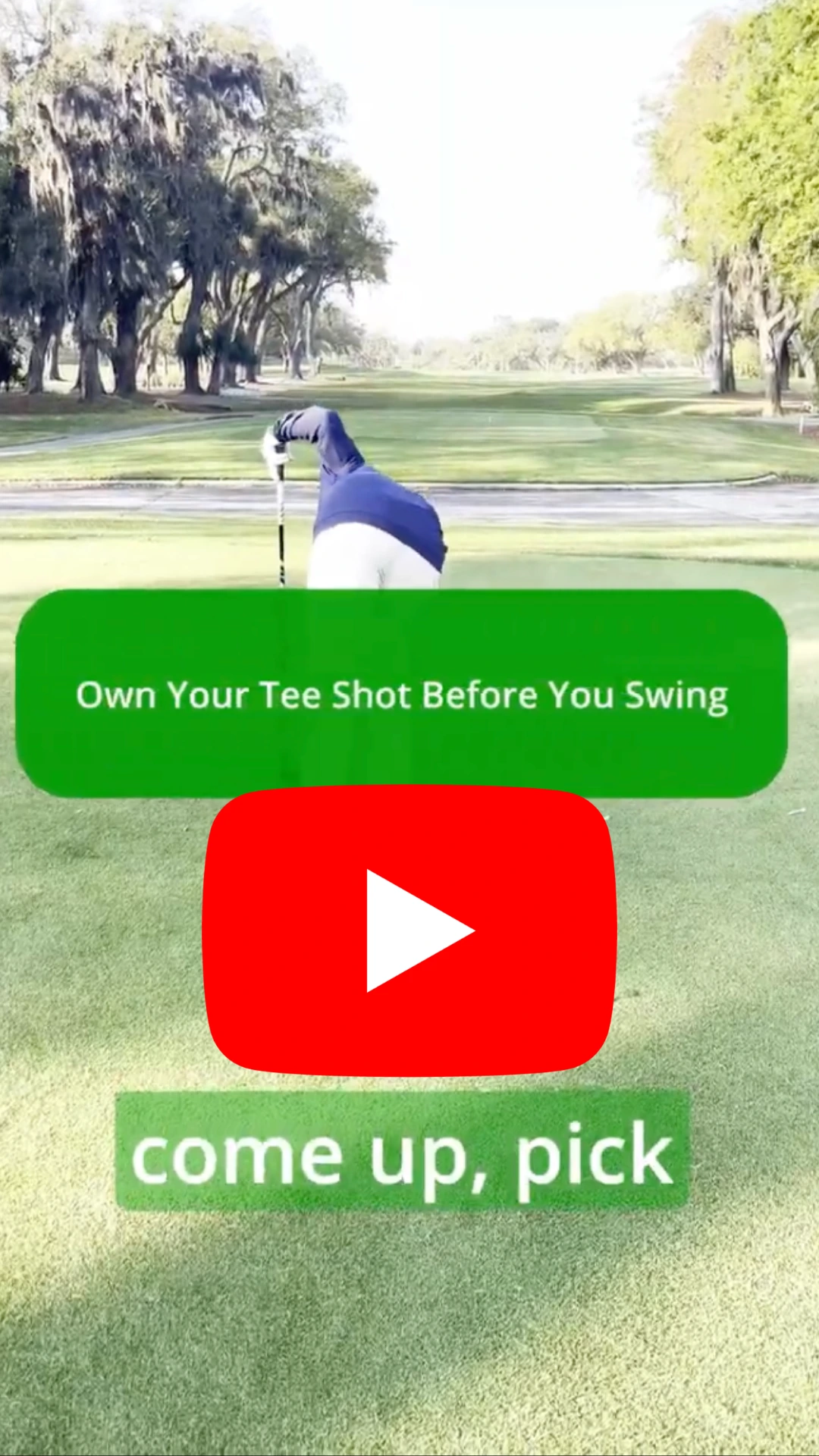
Most golfers underestimate how much a consistent setup stabilizes their swing mechanics. Your set‑up video is the perfect example of what “repeatable” actually looks like in real time.
In that clip, viewers will see:
- How to build the same ball position and stance for a given club.
- How alignment and posture tie directly into a trustworthy pre-shot routine.
- How a simple, repeatable setup becomes the physical foundation for every shot.
Here’s a quick look at the setup routine I want you to practice until it feels automatic:
In your practice sessions, that means:
- Using the same ball position and stance for each club in a given practice session.
- Checking alignment with alignment sticks on the practice range so your eyes and body learn what square actually feels like.
- Making sure your warm-up and pre-shot routine on the practice tee match what you’ll do on the first tee and fairways.
This isn’t about chasing perfect mechanics. It’s about building a setup you can repeat under pressure.
Step 5: Use Constraints and Drills To Build Confidence
(Coin Drill Video)
Smarter practice is not about hitting bucket after bucket of random shots. It’s about using simple drills that simulate the shots and pressure you actually face during a round.
Your coin drill video is a great example of how a small constraint can build real skill:
- A clear target (for example, a coin or marker) at a specific distance.
- A requirement to run the full routine—read, rehearsal, setup, stroke—every time.
- Immediate feedback on distance control and process, not just whether the putt dropped.
This coin drill is one of my favourite ways to train routine and distance control at the same time:
You can use the same logic for wedges and short game:
- Create a simple wedge ladder where each swing length (waist, armpit, shoulder, full) maps to a specific yardage between 50 - 140 yards.
- On each chip, define lie, landing spot, and release, then run one routine and see if you can get up-and-down.
- Add pressure challenges where you only ‘win’ the drill if you commit to your routine on every shot.
The goal is not to make practice comfortable. It’s to train a golf practice routine that holds up when you feel uncomfortable.
Step 6: Build a Wedge Matrix You Can Trust
(Reed Wedge Matrix Video)
Most golfers guess on partial wedges. One day a “soft” pitching wedge goes 85. The next day it flies 100. That’s not a scoring plan; that’s roulette.
A better way is to build a simple wedge matrix: specific swing lengths that produce specific yardages (landing spots) for your wedges.
Here’s how to do it:
- Pick one wedge and one checkpoint, for example a backswing that stops around your armpit with a full finish.
- Hit a series of shots with that same feel and note the average distance.
- Repeat the process for other checkpoints (waist-high, shoulder-high, full), so each one has a real number attached to it, not just a guess.
In the Reed wedge-distance video on this page, you’ll see exactly that: one backswing length, one realistic practice swing, then the same motion repeated into the shot to produce a consistent yardage. The point isn’t perfection; it’s building a routine where “armpit pitching wedge” means roughly the same thing every time.
Once you’ve mapped those numbers, your wedge practice routine gets very simple: pick the closest number, choose the matching swing length, make one rehearsal, then step in and repeat. That’s how you turn partial wedges from anxiety shots into predictable scoring shots.
Step 7: Take Your Routine to Practice Rounds
All of this only matters if you can take it from the practice green and driving range into real rounds. That’s where most amateur golfers fall off; they grind at the driving range, then abandon their practice routine as soon as the round starts.
If you want the best golf practice routine, you need a clear practice plan for your practice rounds:
- Use the same pre-shot routine on every tee shot, approach shot, chip, and putt.
- Treat each hole as a chance to simulate tournament pressure with your routine, not your scorecard.
- Track simple stats, like how many shots you actually executed your routine, rather than obsessing over score alone.
This is where your practice becomes smarter, not longer. You’re training a process that lowers your scores by making your decisions and swings more consistent, not by hitting more golf balls.
Free Checklist: 7 Steps to a Better Practice Round
If you want help turning all of this into a real practice plan, I’ve built a free resource called “7 Steps to a Better Practice Round Checklist.” It walks you through how to:
- Structure your golf practice routine from warm-up to final putt.
- Bring your pre-shot routine to every shot inside 100 yards and around the green.
- Use practice rounds to build confidence instead of beating yourself up.
You can grab it here:
Get the 7 Steps to a Better Practice Round Checklist
Use it on your next practice round, and let your routine, not your emotions, do the heavy lifting.

