
Golf Mindset Coach: Build a Game Plan for Your Worst 20 Minutes on the Course
Every golfer, from the amateur to the seasoned professional, knows the frustration of a promising round derailed by a few disastrous holes. A mental skills coach can provide golf mindset coaching not just for maintaining peak performance, but, more importantly, for navigating those inevitable rough patches in your golf game.
Rethinking What a Golf Mindset Coach Really Does
Many believe a golf coach is solely focused on swing mechanics and course strategy. While these are important, a mental performance coach delves into the psychology and mental skills required to play your best golf and enjoy the game.
They provide mental game training to help golfers develop mental toughness and build confidence, both essential for consistent golf performance, so you can play your best golf.
Why Your Worst 20 Minutes Matter More Than Your Best Rounds
It is easy to play your best golf when everything is clicking. But the best golf is not about avoiding bad shots; it is about how you respond to them on the golf course.
A mental coach equips golfers with mindset coaching and mental game strategies to minimize the damage caused by those inevitable periods of struggle in the game of golf.
The Hidden Cost of “I Lost It for Three Holes”
Every golfer says, ‘I lost it for three holes.’ Sports psychology coaching builds your game plan for upset, so those three holes do not ruin the card. Those three holes can significantly inflate your golf score and impact your overall tournament performance.
An inner game training program helps golfers understand the mental aspect of the game and the golf psychology behind performance in golf. This enables them to recover quickly and prevent a temporary setback from spiraling into a complete collapse.
By focusing on these critical moments, a golf mindset coaching program can produce significant improvements in your overall golf performance and confidence on the course.
You learn to:
- Manage emotions after a poor shot or a bad hole
- Replace negative thoughts with a trusting mindset
- Stay focused on the present moment instead of the last swing
When Golf Starts to Go Sideways
The Upset Spiral: How One Hole Turns into Four
Common Mental Meltdowns You Never See on the Range
It is a common scene on any golf course: a golfer hits a bad shot, and their mental game unravels. What starts as a single mistake spirals into a series of errors, inflating their golf score and making it impossible to shoot lower scores.
The mental coach understands that this is not just about a lack of physical skill; it is about the absence of mental toughness and mental skills to manage upsets. A structured mental game training program helps golfers recognize early warning signs of this “upset spiral” and implement techniques to regain control.
The best golf comes from a balance of physical skill and mental resilience. Without the ability to recover from setbacks, even the most talented amateur with years of playing golf can fall victim to the upset spiral. A mental instructor helps golfers build confidence to weather the storm in tournament golf and casual rounds.
Building Your Personal Game Plan for Upset
Building a personal game plan for upset is a critical step in golf mindset training. This involves identifying your typical responses to stress, developing self-talk strategies to combat negative thoughts, and creating pre-shot and post-shot routines to regain focus.
A mental trainer and golf coach will help golfers learn how to stay calm under pressure and maintain focus on the present moment. This personalized coaching program helps you handle adversity on the golf course without letting one hole ruin your round.
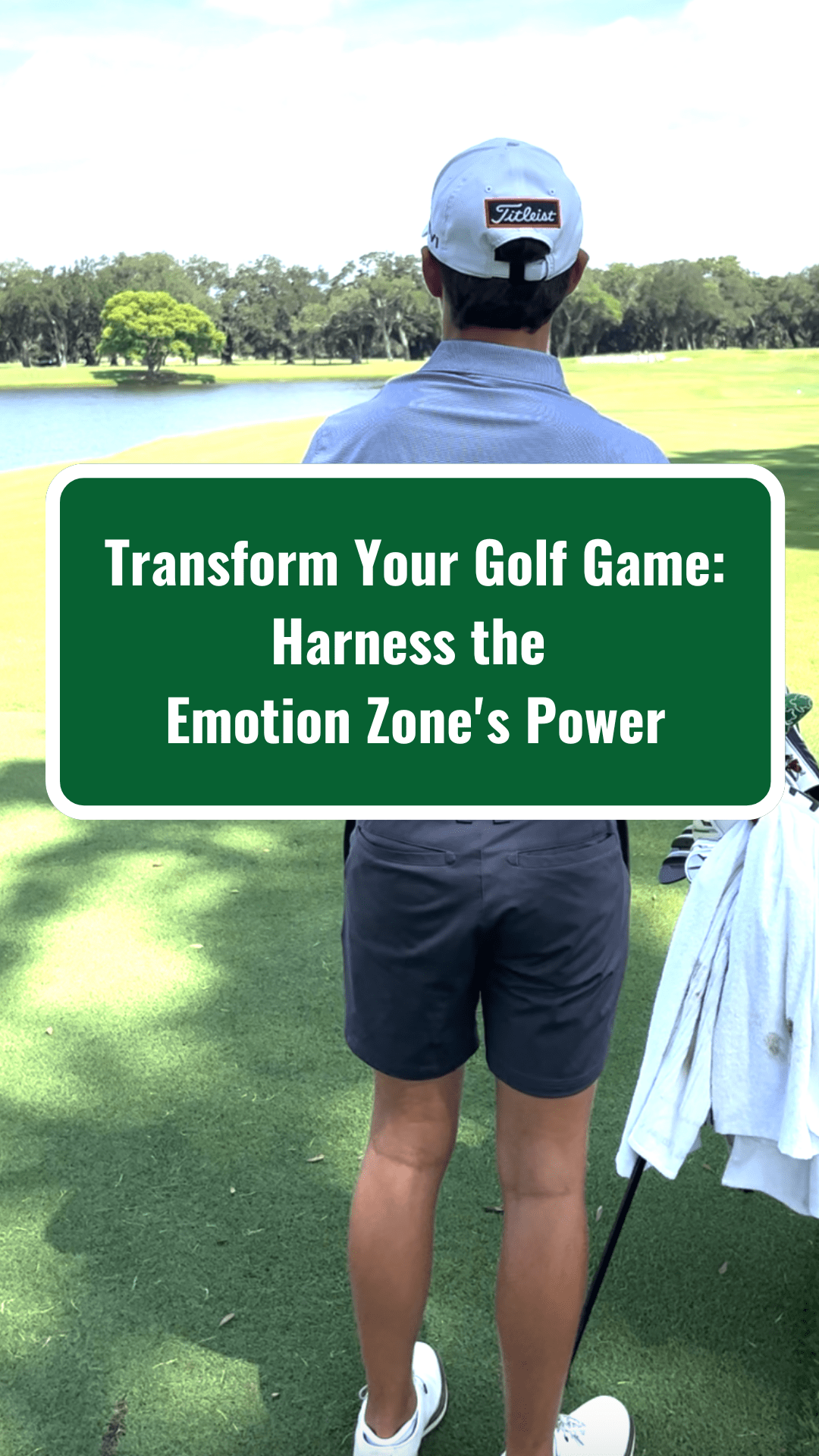
One of the tools used with players is the “Bag‑Up” principle, an on‑course version of the Emotion Zone. In the video below, you will see junior golfer Kaleb Shiver using his golf bag as a physical boundary: he processes the frustration from a poor shot before he picks the bag up again. That simple act becomes a clear line between the last swing and the next one, helping him stay composed and manage his score.
A Simple Framework to Handle Your Next Blow‑Up Hole
The 3 Decisions You Must Pre-Make Before the Round
To effectively handle a blow‑up hole, a simple framework is essential. Pre‑round decisions allow golfers to approach difficult situations on the golf course with clarity and confidence.
A mental instructor helps golfers understand the mental aspect of the game and prepare strategies they will use when under pressure. This preparation empowers golfers of all levels to handle setbacks, maintain focus, and take their golf game to the next level.
To make this real, here’s a short on-course game I use with players: we play best ball off the tee and then switch to worst ball around the green and on the putting surface. In this video, you’ll see Caroline, Taylor, Jack, and Katie putting under “worst ball” rules—both balls eventually have to be holed, so one good putt isn’t enough. It’s a simple way to add pressure, expose how you react when a good putt doesn’t “count,” and train the exact mindset you need for your worst 20 minutes on the course.
Mental Skills Built for Bad Holes, Not Perfect Golf
The golf mental game builds your performance mindset specifically for handling bad holes, not just for playing perfect golf. Instead of chasing flawless swings and swing thoughts, mental coach programs emphasize resilience and recovery techniques.
Golf mindset training prepares the golfer for the inevitable struggles on the golf course, enabling them to manage emotions, stay focused, and mitigate the impact on their golf score, ultimately improving their golf game and helping golfers shoot lower scores.
Learning to Think Clearly When You’re Angry, Embarrassed, or Rushed
How to Reset Between Shots Without Ignoring Your Emotions
Learning to think clearly under pressure is vital in playing golf. Golf psychology coaching and mindset coaching offer mental skills and strategies to manage the flood of emotions that can disrupt focus.
Golfers learn to reset after each shot without suppressing emotions, using mental toughness to recenter and regain performance.
Watch this quick “distractions game” video. I’m talking, joking, and moving while the players putt, forcing them to choose focus on demand. This is exactly the skill you need when a playing partner is chatting, a group is watching, or you’re stewing over the last hole.
Turning “Damage Control” into a Scoring Advantage
Transforming “damage control” into a scoring advantage requires a strategic approach, as taught in golf mindset training. A skilled mental coach enables golfers to view setbacks not as defeats, but as opportunities to demonstrate resilience and strategic thinking in the game of golf.
A mental coach helps golfers understand the mental part of the game, turning potential disasters into tests of mental toughness and mental performance. This mindset, honed through inner game training and golf psychology coaching, can give a golfer a competitive edge and the confidence needed to play their best golf and go low.
How Great Golfers Stop the Bleeding After a Big Number
A critical component of mental toughness is learning to minimize the impact of a high‑scoring hole, as emphasized in golf mindset coaching. Learning to ‘stop the bleeding’ quickly is a mental game skill that separates top golfers from the rest.
Bounce‑Back Basics: From Double Bogey to Back on Track
Mastering the bounce‑back is a fundamental aspect of sports psychology coaching and golf mental game training. This involves a set of mental skills that often includes:
- Quickly recovering from setbacks
- Regaining momentum and maintaining focus on the present
- Managing emotions after a bad putt or swing
With a golf coach, an amateur can improve their mental approach, lower their handicap, and get back on track after a bad hole.
How Score Better Students Handle Their Worst 20 Minutes
Want to see how this looks in real life?
In the video below, Elizabeth—a senior headed to Vanderbilt and a Score Better Video Program student—shares the simple checklist she uses in tournament golf when she is not hitting it great.
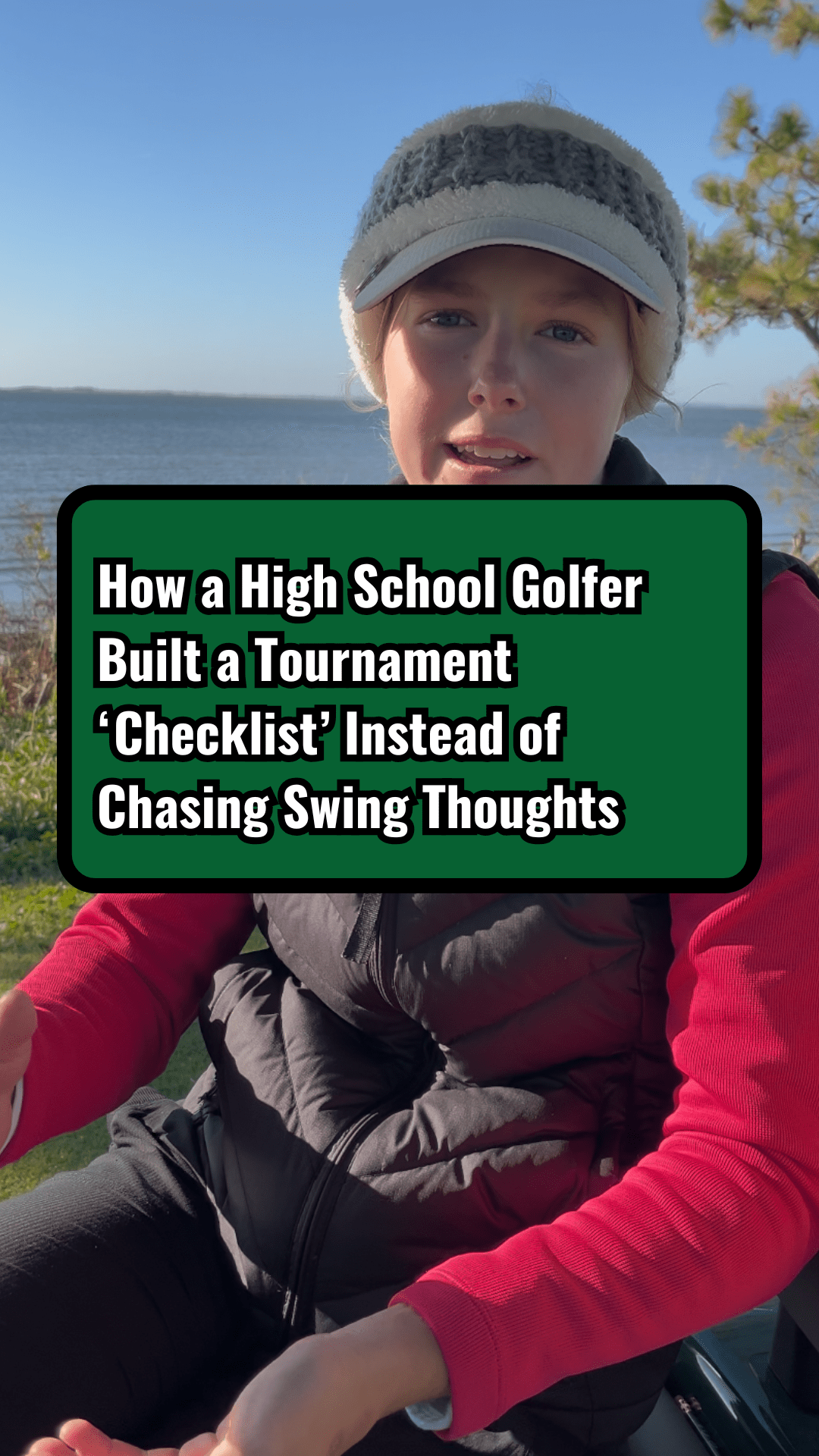
If you want a checklist and game plan for your own worst 20 minutes, join the Score Better Video Program and start training your golf mental game the same way my PGA Tour players and college golfers do.

