
Effective Golf Visualization Techniques: How to Master Your Mind, Visualize Your Golf Shots, and Play Better Golf Like Jack Nicklaus
As a golf coach who has worked with players across all skill levels, from amateurs struggling on the first tee to champions on the PGA Tour, I often notice that every golfer spends endless hours on their physical game. They obsess over their golf swing, analyzing their swing path, club position, and tempo. Yet, they overlook the single most influential factor before they hit the ball: where their eyes are looking and what picture their mind is creating.
The truth is simple: your eyes tell your mind what to do, and your mind tells your body what to do.
"Productive vision" is paramount to hitting your best shots. Unfortunately, most players don't even know where they look before a golf shot. They stand over the ball, glare down the fairway, and let fear take over.
The concept of visualization isn't about daydreaming or wishing for a perfect swing. It is about giving your brain a clear, actionable instruction. Legendary champion Jack Nicklaus famously described how he would always visualize every single motion: "I never hit a shot, even in practice, without having a very sharp, in-focus picture of it in my head." Greats like Tiger Woods used similar mental practice techniques to reach peak performance under intense pressure.
When you incorporate visualization as part of your pre-shot routine, you bridge the gap between mechanics and athletic execution. Below, we'll examine the primary benefits of visualization, how to master your mind, and look at five real-world coaching examples from my player videos that showcase these effective visualization techniques in action.
The Power of Productive Vision in the Mental Game of Golf
Understanding the idea of visualization starts with recognizing how your sight dictates muscle movement. In the mental game of golf, fear often stems from ambiguous or negative visual input. If you step up to the tee on a tight hole and look at the water hazard, your eyes send a panic signal to your brain. You start worrying about a bad shot, tightening your hands, and swinging scared.
When you learn how to visualize, you shift your focus from what you don't want to happen to what you do want to achieve. Having the ability to visualize allows you to see the target clearly, feel the shot in your hands, and give your body a positive blueprint.
To visualize your shots effectively, you don’t need to force a vivid movie in your mind if you aren't naturally visual. Starting to visualize can simply mean picking an exact spot on the grass or getting a clear sense of the trajectory. Whether you visualise a high draw or a low chip shot, the goal is simply to get visually “clear” or “precise” before you start your motion.
5 Real-World Golf Visualization Techniques for Your Pre-Shot Routine
Here are five specific ways to use golf visualization techniques to improve your golf game, illustrated through actual coaching sessions with my players.
1. The Driver Routine: Narrowing Vision to Avoid Trouble on the Tee
When facing an intimidating fairway, many players look down the course and see "too much trouble." That broad, fear-based vision causes them to look up early and swing defensively.
With my player Maya, we simplified her visualization process by introducing a close intermediate target, just a few feet ahead of the ball. Once her grip is set, her visual routine is exact: two calm looks at the intermediate target, count one-two, and swing. By focusing on a close point rather than looking back down the fairway for a perfect picture, she simplifies the goal (hit it over my target) and her mind stays clear and calm.
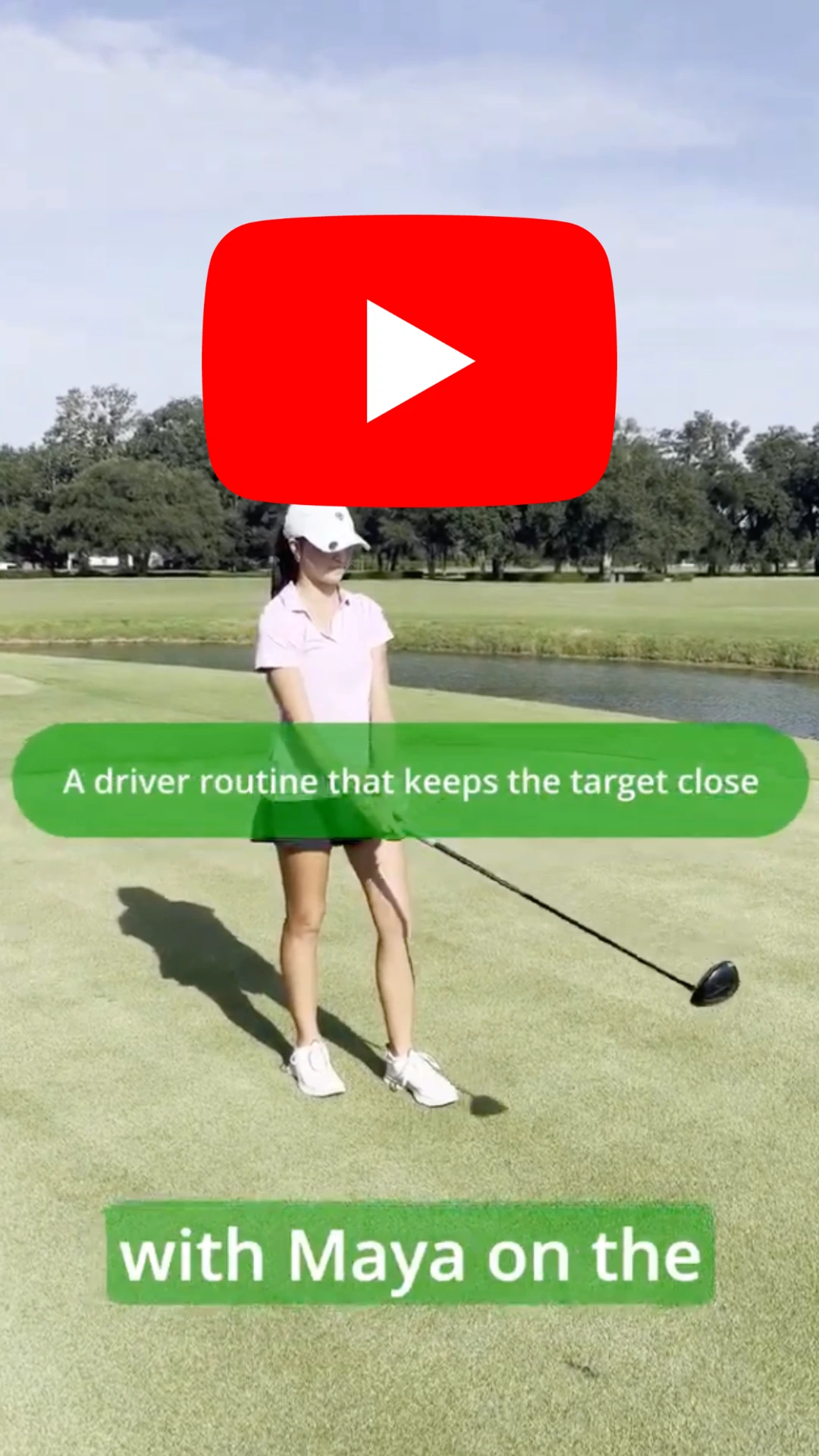
Watch how Maya limits her vision to an intermediate target to eliminate driver fear and hit the fairway.
2. Short Game & Chip Shots: Re-Running the Video to Feel the Shot
Short-game shots require creativity, but they crumble under last-second doubt. With my player Taylor, we built a visual routine for her chip shots that leaves room for feel while removing hesitation.
Behind the ball, Taylor takes evaluative practice swings to gauge the lie. Then, standing behind the ball, she sees the shot, imagines the ball landing on her landing spot, and makes one affirmative practice swing—matching the exact energy, motion, and finish she wants. From there, she steps in, "re-runs the video" in her mind, and lets her body execute the shot.
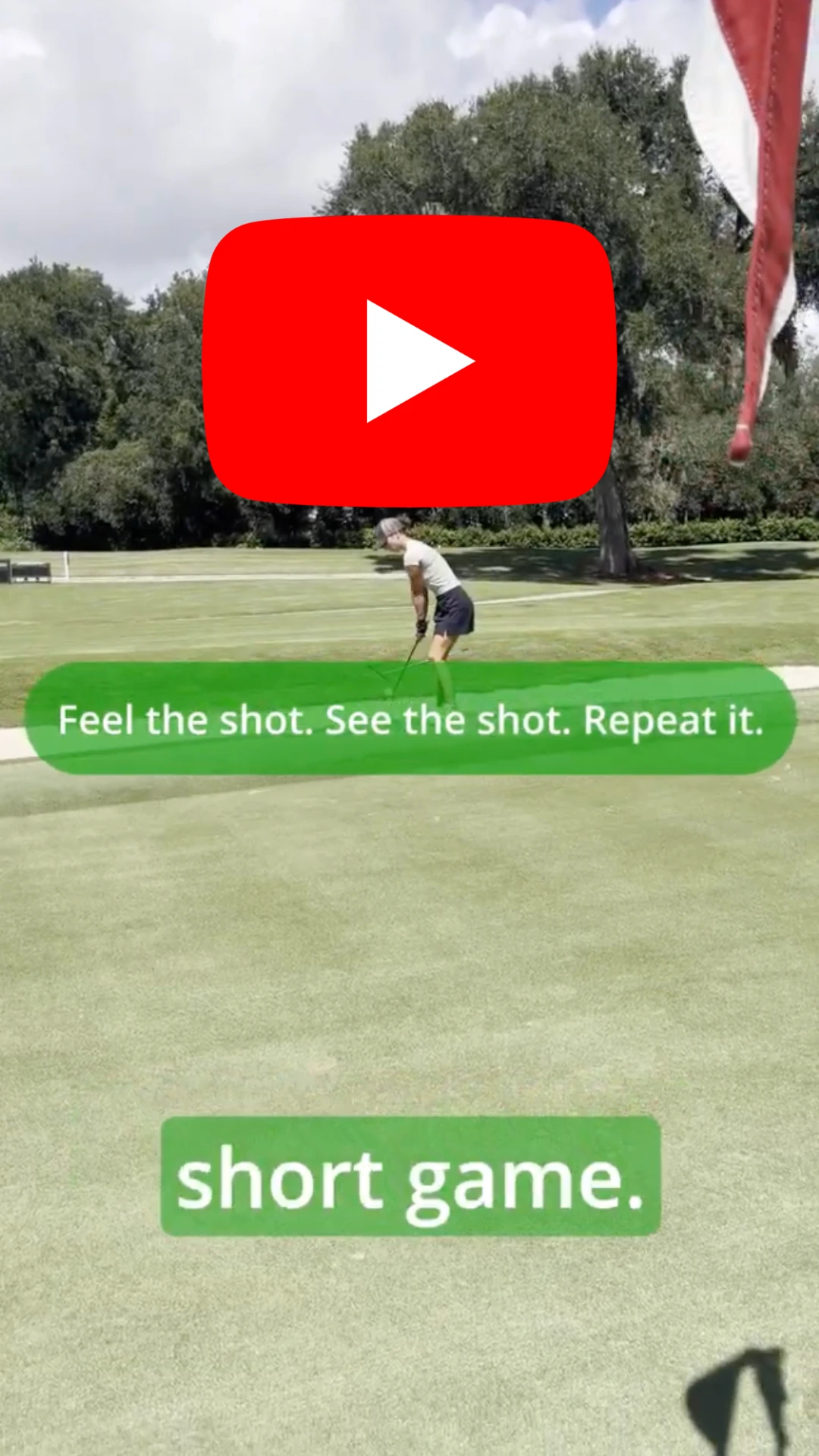
In this clip, Taylor demonstrates how seeing the ball’s trajectory and re-running the mental video creates touch around the green.
3. Full Swing Target Line: Committing to the Visual Line
Before stepping into execution, establishing a sharp visual line helps commit your mind to the exact path you want the ball to travel. With my player Will, we focus on establishing that vivid mental target from behind the ball before setting up over the shot.
By committing visually to the starting line and trajectory behind the ball, Will removes ambiguity from his target alignment. When he steps in, his eyes have already locked in the target, allowing him to hit the ball with complete visual commitment.
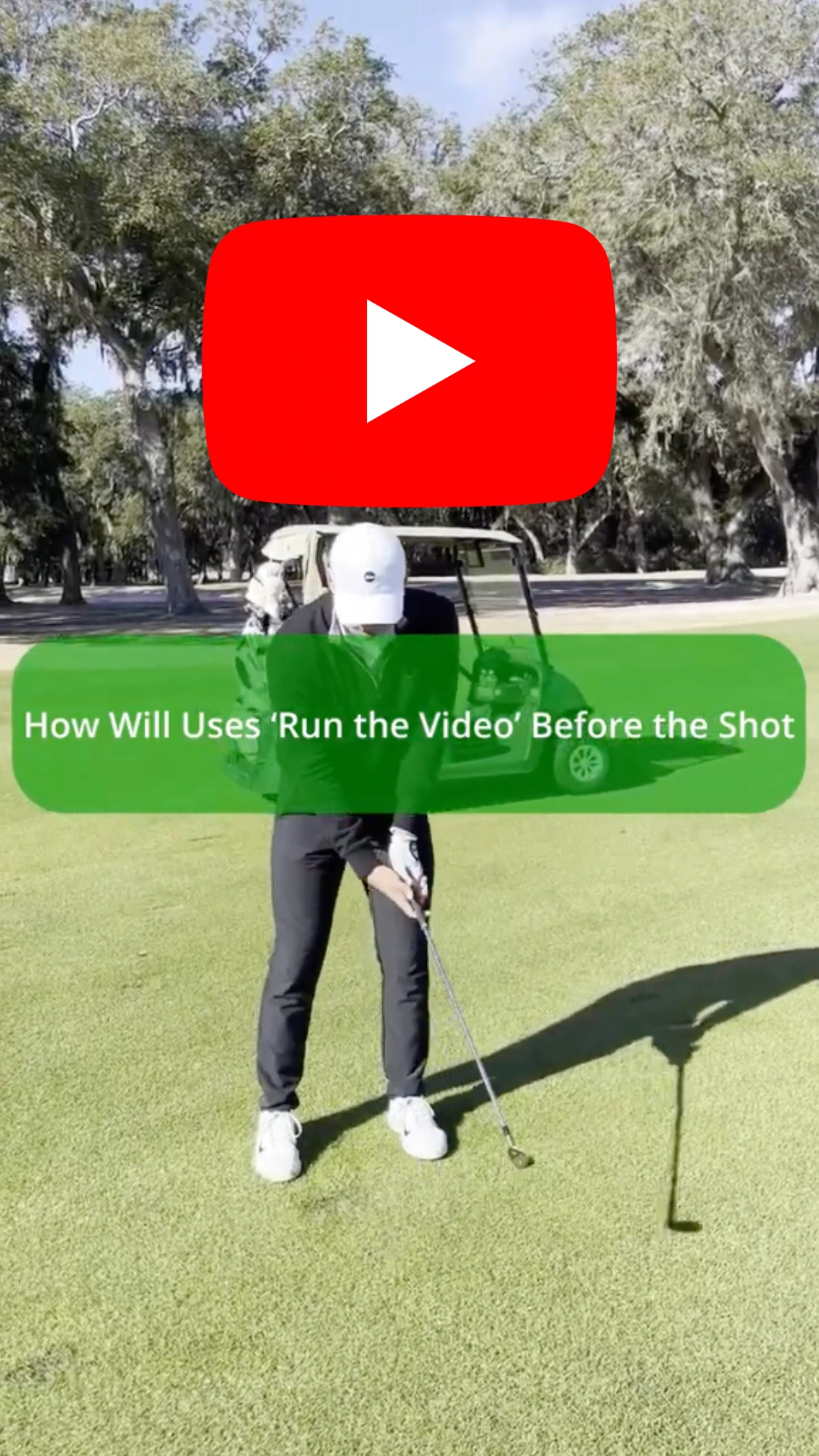
Watch how Will uses his pre-shot vision to lock in the target line before executing his shot.
4. Putting Visualization: See the Start Line, Then Trust Your Routine
Putting visualization is not just about hoping the ball drops. It is about creating a precise picture of the line you want the ball to start on, then committing to the process that helps you roll it there.
With Clay, the focus is on detail and consistency. Before stepping into the putt, he picks a specific target just outside the hole, takes a couple of deep breaths, and visualises the ball starting on that line and rolling into the cup. Once he is committed to that picture, he steps in and follows the same routine: setting the putter face, using his breath to stay calm, looking at the target, looking back at the ball, and letting the stroke go.
That level of clarity matters most when the pressure rises. The putt may or may not fall, but Clay knows exactly what he is going to do. Rather than reacting to nerves or trying to steer the ball, he trusts his visualisation and his process to produce a committed stroke.
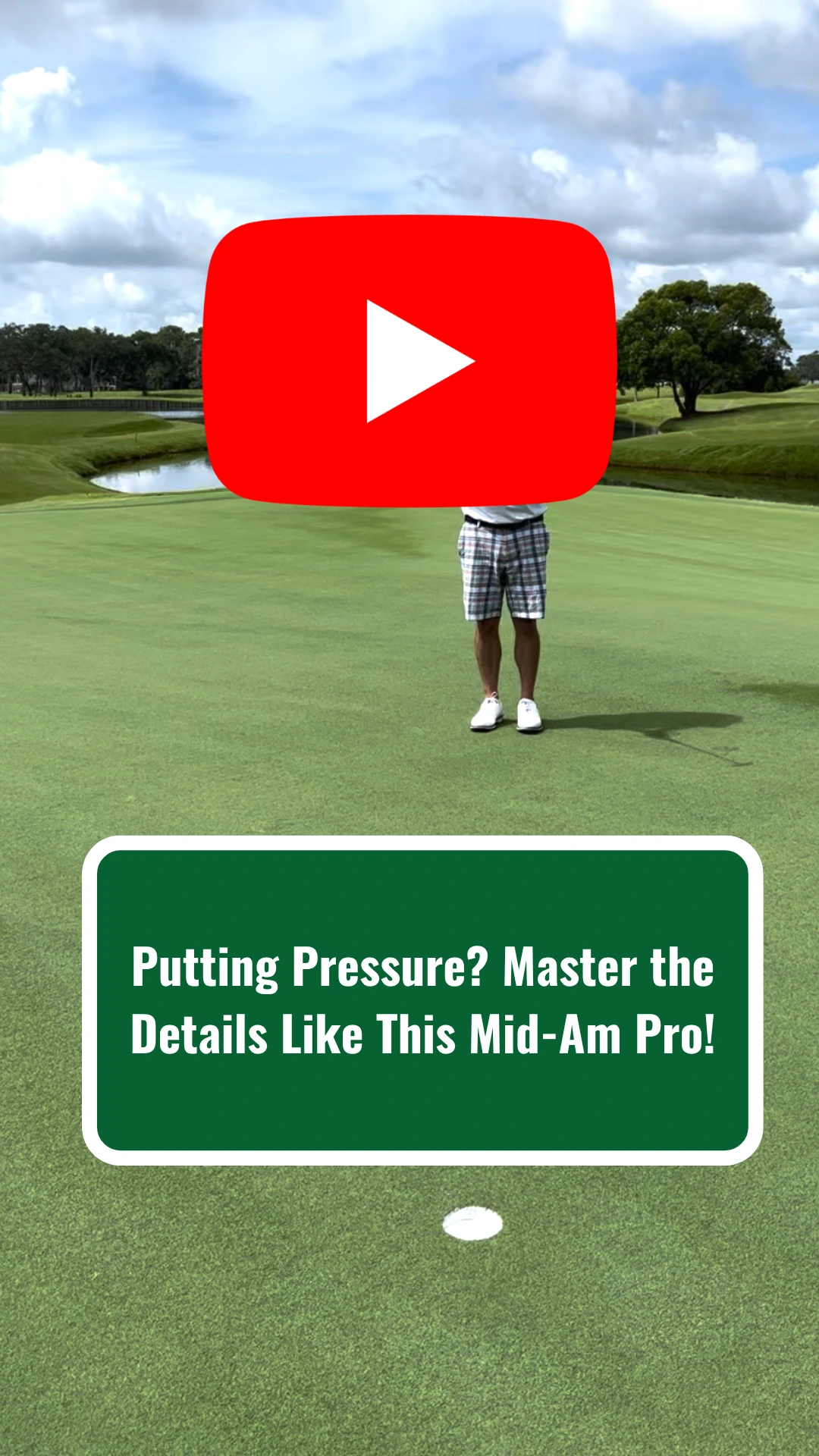
Watch Clay use a detailed visualisation and breathing routine to commit to his putting line.
5. Visual Commitment: Eliminating Doubt Over the Ball
Hesitation over the ball usually means your vision is unfocused or bouncing between targets. In this coaching session with Riley, we emphasize absolute visual commitment once you step into the hitting area.
By locking in a single, unwavering visual focal point before starting the motion, Riley quiets the internal noise and prevents last-second corrections during the backswing.
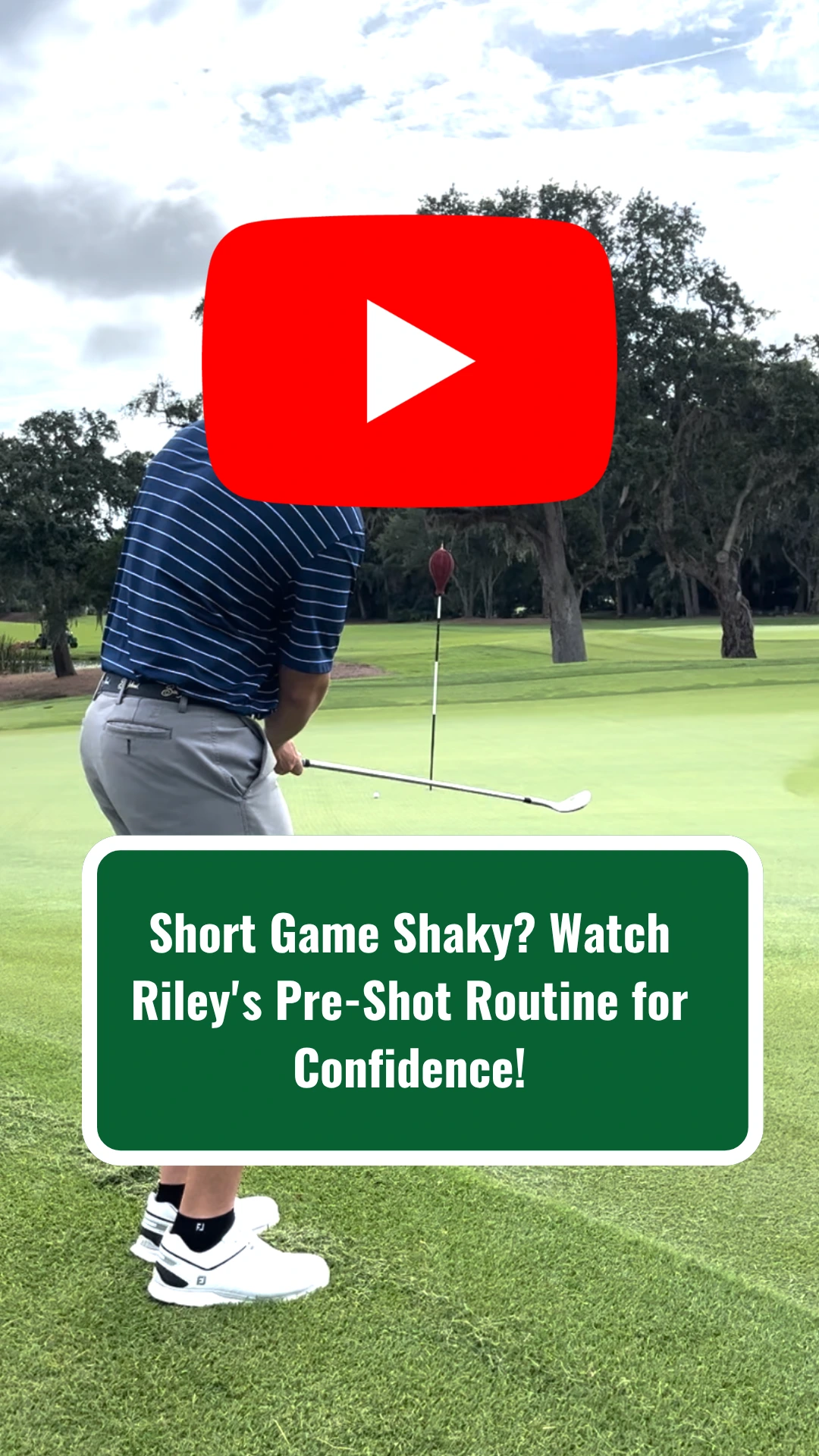
Watch how Riley locks in his visual focal point to commit 100% to every swing.
How to Use Visualization to Improve Your Mental Toughness on the Golf Course
To truly improve your mental game during a round of golf, you must recognize when to gather information and when to execute.
When you stand behind the ball, that is your space to gather data: check the wind, evaluate the lie, see the ball flight, and pick your target. But once you step into the hitting area, gathering time is over. You must shift into trusting your routine.
Here is how you can incorporate visualization into your own game starting today:
- Pick a Specific Target: Don't just target "the fairway." Pick a single tree branch or an intermediate spot on the grass.
- Commit to the Flight: Picture the flight of the ball or ‘see’ the ball going toward your landing spot.
- Use a Visual Trigger: Decide in advance how many looks you will take at the target (e.g., two looks) before starting your backswing.
- Trust and Release: Once your trigger occurs, stop analyzing and let your body hit the shot.
Final Thoughts: Elevate Your Performance Golf with Productive Vision
Mastering mental golf doesn't require hours of meditation or complex psychological formulas. By applying simple, effective visualization techniques, you give your body a clear direction and quiet the noise in your mind.
Whether you want to visualize a shot off the first tee, feel a delicate chip, or sink a crucial putt, remember that your eyes lead the way. Train your eyes to focus on productive targets, and you will develop the mental toughness needed to play better golf every time you step onto the golf course.
Step Into Your Mental Gym: The Score Better Video Program
Understanding golf visualization techniques is a powerful first step, but lasting mental toughness requires structured, ongoing practice, just like building physical strength in the gym. If you're ready to stop losing strokes to nerves or doubt, it's time to build a strong mindset alongside world-class pros like Keegan Bradley, Zach Johnson, and Tom Kim.
The Score Better Video Program serves as your ultimate mental gym, giving you a systematic framework to master the course:
- 140+ Bite-Sized Video Lessons: Practical, actionable modules designed for quick integration into your practice and rounds.
- 4 In-Depth System Guides: Comprehensive strategies covering course management, pre-shot routines, and emotional focus.
- Complete 3-Part Framework: Proven methods across On-Course Thinking, Practice & Preparation, and Off-Course Mindset.
You've already invested countless hours refining your physical golf swing. Give your mental game that same elite focus and unlock your true potential. Explore the Score Better Video Program to find flexible membership options, including a 20% saving. Begin your mental training today.

